Expansion Tank and Fittings
We supply the tank, a brass tee, a new flex connector, and any nipples or adapters needed. Tanks are sized to your heater's gallon capacity and your measured static PSI, not a one-size guess.
Water Heater Expansion Tank Installation Littleton CO keeps your closed plumbing system from over-pressurizing every time the burner fires. If your tank is missing one, leaking at the fitting, or waterlogged, we swap it the same day. We serve homeowners across Arapahoe County, from Downtown Littleton to Ken Caryl, with licensed work and upfront pricing.
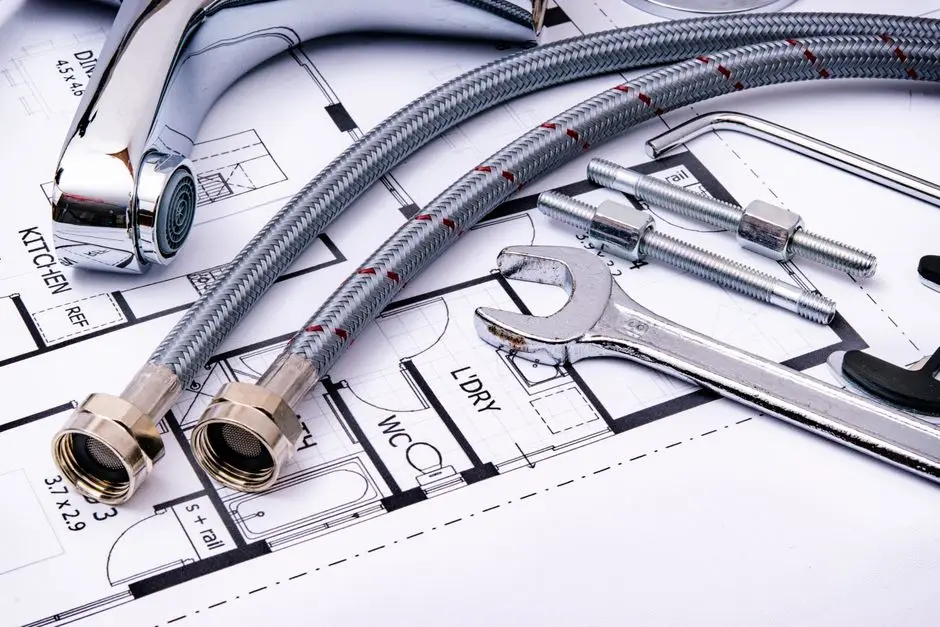
Water Heater Expansion Tank Installation Littleton CO is the plumbing service that adds a sealed, air-charged tank to your water heater's cold-water inlet so heated water has somewhere to expand. When water heats, it grows in volume. In a closed system with a backflow preventer or pressure-reducing valve, that extra volume has nowhere to go, so pressure climbs. The expansion tank absorbs it, keeping your system between 40 and 80 PSI.
Homes across Littleton run on closed systems more often than owners realize. Newer builds in Ken Caryl and Governor's Ranch almost always have a backflow preventer at the meter, and any home with a pressure-reducing valve needs a thermal expansion tank installation Littleton CO to stay code-compliant. Without one, you'll see dripping T&P valves, failing pressure relief valves, and shortened water heater life. If you've searched for expansion tank installation near me Littleton CO, we handle it.
Every expansion tank install we do includes the parts, the labor, and the testing. Here's what you get. Anything outside this list, like a new pressure-reducing valve or a full heater replacement, we quote separately before we start.
We supply the tank, a brass tee, a new flex connector, and any nipples or adapters needed. Tanks are sized to your heater's gallon capacity and your measured static PSI, not a one-size guess.
We measure static and peak PSI before and after the install with a calibrated gauge. If your home runs over 80 PSI, we tell you and quote a PRV. The tank alone won't fix high incoming pressure.
Every tank ships with a factory pre-charge, usually 40 PSI. We adjust it to match your home's static pressure so the tank doesn't waterlog early. That's the difference between a 5-year tank and a 2-year tank.
We test the temperature and pressure relief valve while we're there. If it's stuck, corroded, or weeping, we note it and quote a replacement. A failed T&P valve is a safety issue.
We pull and inspect the anode rod if it's accessible. A corroded rod and a failed expansion tank often go together. If the rod is spent, we can replace it in the same visit.
We haul away the old tank and any packaging, wipe down the area, and walk you through the new setup. You get a photo of the final install and a written pre-charge spec for next time.
Call us at +1 303-879-0886 or book online. We ask for your water heater brand, tank size, and whether you have a pressure-reducing valve. That tells us which expansion tank to load on the truck. Most calls take five minutes.
A licensed tech arrives with a pressure gauge and checks your static and peak PSI. If you're already over 80 PSI, we note it and address it. We also inspect the T&P valve, the anode rod, and the cold-water inlet for corrosion.
We size the expansion tank to your heater's gallon capacity and your incoming pressure. A 40-gallon heater at 60 PSI usually takes a 2-gallon tank. We mount it on the cold side, above the heater, using a brass tee and a new flex connector.
We cut the line with a tube cutter, solder or press the tee, thread the tank, and set the pre-charge to match your home's pressure. Then we refill, bleed air, and watch the gauge through two full heating cycles. Two to four hours, start to finish.
We show you the new tank, tag the install date, and leave the pre-charge spec written on the tank. You get a photo of the final setup and a warranty card. If anything drips in the next 30 days, we come back at no charge.
Call us at +1 303-879-0886 or book online. We ask for your water heater brand, tank size, and whether you have a pressure-reducing valve. That tells us which expansion tank to load on the truck. Most calls take five minutes.
We use a 0-200 PSI gauge with a hose bib adapter to read static and peak pressure at your home. That reading drives the tank size and the pre-charge setting.
A clean, square cut on copper or PEX is the first step to a leak-free tee. We use a rotary cutter, not a hacksaw, so there's no burr or metal shaving in the line.
For copper lines, we sweat the brass tee with a lead-free solder and a shielded torch. We use a heat shield to protect nearby framing and insulation.
Threading the tank onto the tee takes a proper pipe wrench and Teflon tape or pipe dope. We torque to spec so the connection doesn't weep under pressure.
We pull the anode rod on accessible heaters to check for corrosion. A spent rod and a failed expansion tank often show up in the same visit.
For tanks in tight closets or behind finished walls, we use a borescope to check the inlet, the T&P valve, and the fitting before we cut anything.
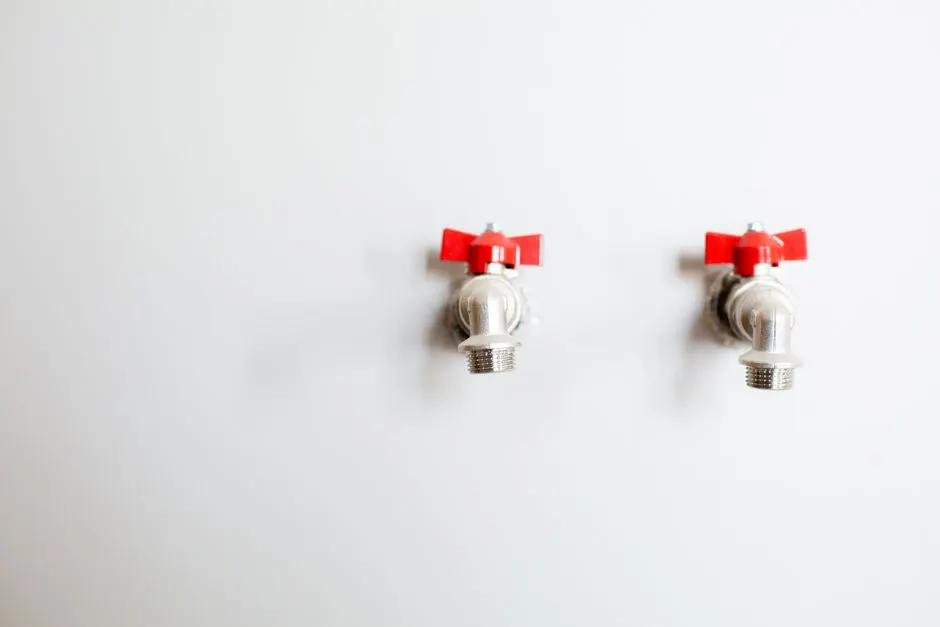
A 50-gallon gas heater in Ken Caryl had been dripping from the T&P valve for six weeks. Static pressure read 105 PSI. The homeowner had already replaced the valve once, and it was dripping again.
After: We installed a pressure-reducing valve set to 65 PSI and a 4.5-gallon expansion tank. Peak pressure now tops out at 78 PSI. The drip stopped the same afternoon and hasn't returned.
Book this service →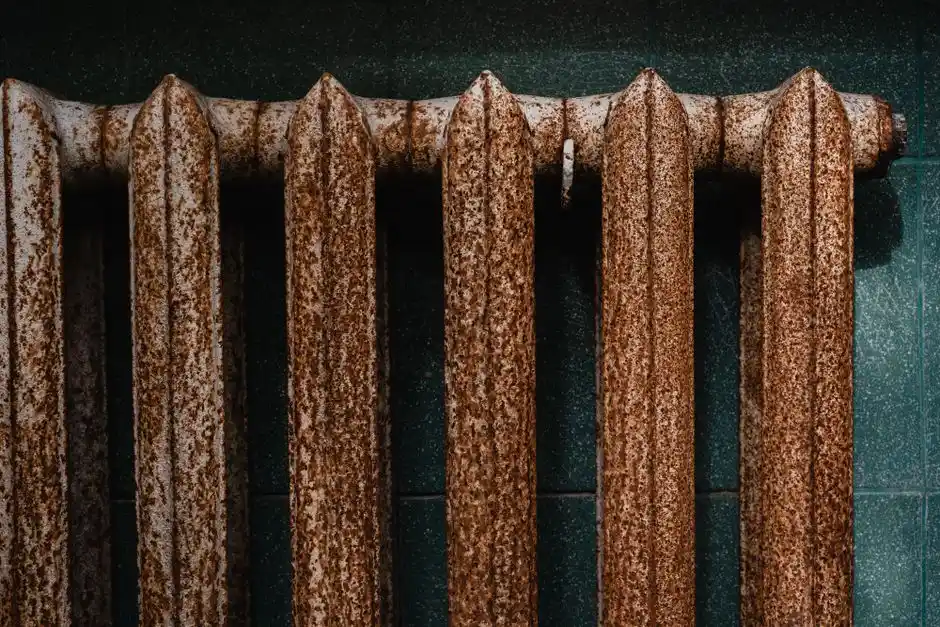
A 6-year-old expansion tank in Governor's Ranch had lost its air charge. The bladder had failed, and the tank was full of water. The heater's T&P valve was weeping and the homeowner was told the heater needed replacing.
After: We replaced the tank with a new 4.5-gallon unit, set the pre-charge to 72 PSI to match the home's static pressure, and tested through two heating cycles. The T&P valve stopped dripping and the heater stayed in service.
Book this service →A homeowner in Bow Mar had a new 75-gallon Rheem installed by a handyman. No expansion tank was added, even though the home has a backflow preventer at the meter. Within four months, the T&P valve was dripping and the warranty paperwork was flagged.
After: We installed a 4.5-gallon expansion tank on the cold inlet, pressure-tested the system, and documented the install for the warranty file. The drip stopped and the manufacturer honored the tank warranty.
Book this service →Most people call us because something is dripping, popping, or failing early. Here are the four problems we fix most often with a properly installed expansion tank.
Ask a pro →We measure your peak pressure, install a correctly sized expansion tank, and replace the T&P valve if it's already damaged. Most drips stop the same day.
We add an expansion tank to smooth the pressure swings. That alone can add years to your current heater's life and protect the warranty on a new one.
We bring system pressure down to 60 PSI or less with a correctly sized tank. That one fix usually ends the string of small leaks and failed valves.
We test the pre-charge, replace the tank if the bladder has failed, and set the new one to match your home's pressure. We also check why the first one failed.
Most jobs run $280 to $520 in 2026, including the tank, fittings, and labor. A basic 2-gallon tank on an accessible 40-gallon heater sits at the low end. A 4.5-gallon tank, a tight closet, or a corroded inlet that needs a new nipple pushes it higher. We quote flat before we start.
Yes, if your home has a backflow preventer, a check valve, or a pressure-reducing valve. That makes your system closed, and closed systems need a thermal expansion tank to absorb pressure. Most Littleton homes built after 1990 have one of those three. If you're not sure, we can check in 10 minutes.
We do. Littleton Plumbing Solutions installs expansion tanks across Arapahoe County, from Downtown Littleton to Ken Caryl and Bow Mar. Our techs are state-licensed and NATE-certified. We carry Rheem, A.O. Smith, and generic tanks on the truck and can usually finish the job the same day you call.
It depends on your heater's gallon capacity and your incoming pressure. A 40-gallon heater at 60 PSI typically takes a 2-gallon tank. A 50-gallon at 80 PSI takes a 4.5-gallon. We measure static PSI on site and size to the higher of the two, so the tank doesn't waterlog early.
One call and we'll size it, install it, and pressure-test it the same day. Licensed, insured, and warrantied for 12 months on labor. Call +1 303-879-0886 or book online.
Book My Install +13038790886 →Call us at +1 303-879-0886 or send an email to info@littletonplumbingsolutions.com. We answer the phone 24/7 for emergencies and book regular service Monday through Friday. Most calls get a same-day slot, and we will give you a real arrival window, not a four-hour block.